Jawahar Navodaya Vidyalaya Selection Test-2021 for admission of students in Jawahar Navodaya Vidyalayas to Class VI for the session 2021-22 is rescheduled on 11.08.2021 in all the States and UTs. The registered candidates may download the admit cards with revised date of selection test with effect from 23.7.2021. Download the admit card using following link :-https://cbseitms.nic.in/RegistrationEditLogin.aspx
On clicking the above link, window given below will open. In this window you write your registration number, date of birth, than fill captcha and click on “Sign in” than download tha admit card.
If you do not remember the registration number, than click on “Find Your Registration No” , the following new window will open-
Fill correct name of you, yours father, your mother mother and your date of birth, than fill the captcha in box and click on “Search Registration No,” to proceed. If you become fail to get your registration number than use different spelling in the names. BEST OF LUCK
जवाहर नवोदय विद्यालय चयन परीक्षा-2021, सत्र 2021-22 के लिए जवाहर नवोदय विद्यालयों में कक्षा VI में छात्रों के प्रवेश के लिए सभी राज्यों और केंद्र शासित प्रदेशों में 11.08.2021 को पुनर्निर्धारित किया गया है। पंजीकृत उम्मीदवार 23.7.2021 से चयन परीक्षा की संशोधित तिथि के साथ प्रवेश पत्र डाउनलोड कर सकते हैंI निम्नलिखित लिंक का उपयोग करके प्रवेश पत्र डाउनलोड करें: –https://cbseitms.nic.in/RegistrationEditLogin.aspx
ऊपर दिए गए लिंक पर क्लिक करते ही नीचे दी गई विंडो खुल जाएगी। इस विंडो में आप अपना पंजीकरण नंबर, जन्मतिथि लिखें और कैप्चा भरकर प्रवेश पत्र डाउनलोड करने के लिए “साइन इन” पर क्लिक करें।
यदि आपको पंजीकरण संख्या याद नहीं है, तो “Find Your Registration No” पर क्लिक करने के बाद, निम्नलिखित नई विंडो खुल जाएगी-
अपना, अपने पिता, अपनी माता माता का सही नाम और सही जन्मतिथि भरें। बॉक्स में कैप्चा भरें और आगे बढ़ने के लिए “Search Registration No” पर क्लिक करें। यदि आप अपना पंजीकरण नंबर प्राप्त करने में विफल हो जाते हैं तो नामों में अलग-अलग वर्तनी का उपयोग करें। शुभकामनाएं
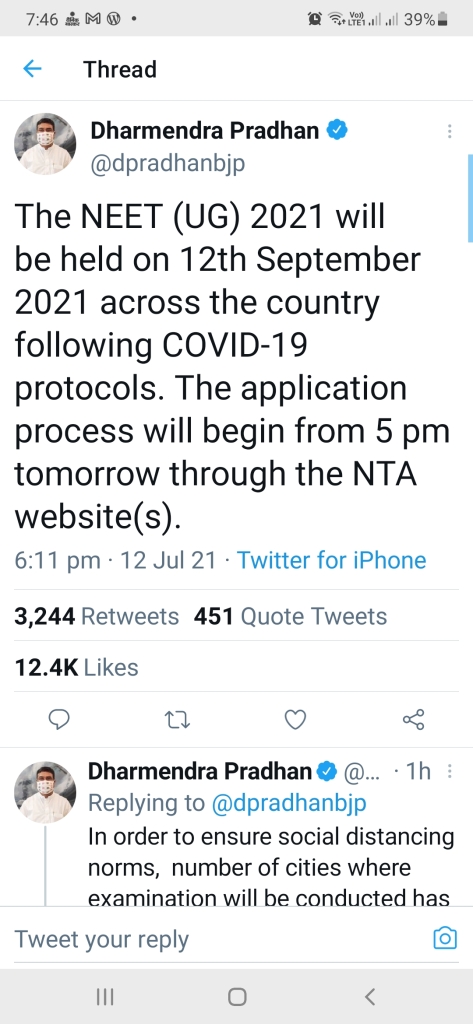
Medical Entrance Exam will be conducted on 12 September 2021 with following Cororna Covid 19 Protocol. Online applications process will begin from 5.00 pm tomorrow i.e.13.07. 2021, through NTA website. In order to ensure social distancing norms, number of cities where examination will be conducted has been increased from 155 to 198.The number of Examination Centre will also be increased from the 3862 center’s used in 2020.- Twitted by Mr. Dharmendra Pradhan, Indian central Government Education minister Minister on 6.13 pm today i.e. 12.07.2021
For detailed information about visit NEET on following website address- https://ntaneet.nic.in
मेडिकल प्रवेश परीक्षा 12 सितंबर 2021 को कोरोना कोविड 19 प्रोटोकॉल का पालन करते हुए आयोजित की जाएगी। ऑनलाइन आवेदन प्रक्रिया एनटीए की वेबसाइट के माध्यम से कल, 13.07.2021 को शाम 5.00 बजे से शुरू होगी। सामाजिक दूरी के मानदंडों को सुनिश्चित करने के लिए, जिन शहरों में परीक्षा आयोजित की जाएगी, उनकी संख्या 155 से बढ़ाकर 198 कर दी गई है। परीक्षा केंद्रों की संख्या भी 2020 में उपयोग किए गए 3862 केंद्रों से बढ़ाई जाएगीI – आज शाम यानि 12.07.2021को 6.13 बजे श्री धर्मेंद्र प्रधान,शिक्षा, कौशल विकास और उद्यमिता मंत्री (भारतीय केंद्र सरकार) द्वारा ट्वीट किया गया I
एनईईटी के बारे में विस्तृत जानकारी के लिए निम्नलिखित वेबसाइट पते पर जाएं- https://ntaneet.nic.in
First 100 participants of quiz will get certificate if they score is 60% or more. CLICK HERE TO GIVE QUIZ
प्रश्नोत्तरी के पहले 100 प्रतिभागियों को प्रमाण पत्र मिलेगा यदि उनका स्कोर 60% या उससे अधिक है। CLICK HERE FOR QUIZ
Approximate population of world on 10 July 2021- 7,908,880,525 (7.90Billion)
10 जुलाई 2021 को विश्व की अनुमानित जनसंख्या :- 7,908,880,525 ( 7 अरब 90 करोड)
The expected world population in 2030 is, 2030 में विश्व की अपेक्षित जनसंख्या होगी
8 Billion
The expected world population in 2040 is, 2040 में विश्व की अपेक्षित जनसंख्या होगी
9 billion
The expected world population in 2030 is, 2050 में विश्व की अपेक्षित जनसंख्या होगी
10 billion
One person added to world — — in every 0.39 Second संसारमें एक व्यक्ति जोड़ा जाता है। – — प्रत्येक 0.39 सेकंड में
Advertisements
World population day is celebrated to create awareness to control population, family planning, gender equality, poverty, mental health and human right. विश्व जनसंख्या दिवस जनसंख्या नियंत्रण, परिवार नियोजन, लैंगिक समानता, गरीबी, मानसिक स्वास्थ्य और मानव अधिकार के प्रति जागरूकता पैदा करने के लिए मनाया जाता है।
World Population Analysis विश्व जनसंख्या विश्लेषण
Births per Day in the world विश्व में प्रति दिन जन्म
382,865
Deaths per Day in the world विश्व में प्रतिदिन होने वाली मृत्यु
163,925
Net increase in world population per Day प्रति दिन विश्व जनसंख्या में शुद्ध वृद्धि
218,940
424 people in 1 square kilometer in India
1127 people in 1 square kilometer in Baangladesh
Compare the parameters मापदंडों की तुलना
China चीन
India भारत
Pakisan पाकिस्तान
USA अमेरिका
Population जनसंख्या
1.444 Billion 144 Crores
1.393 Billion 139 crores
0.225 Billion ( 22 crores)
0.332 Billion ( 33 Crores)
Population density- Persons per square Kilometre आबादी घनत्व- व्यक्ति प्रति वर्ग किलोमीटर
149
424
255
36
Population Growth rate जनसंख्या विकास दर
0.34%
0.97%
1.95%
0.58
% of World Population विश्व की % आबादी जनसंख्या
18.34%
17.69%
2.86%
4.23%
World Level Rank in Population विश्व स्तरीय जनसंख्या स्थिति
1
2
5
3
Compare the parameters मापदंडों की तुलना
Indonesia इंडोनेशिया
brazil ब्राजील
Bangladesh बांग्लादेश
Russia रूस
Population जनसंख्या
0.276Billion 27 Crores
0.214 Billion 139 crores
0.166 Billion ( 16 crores)
0.145 Billion ( 14 Crores)
Population density- Persons per square Kilometre आबादी घनत्व- व्यक्ति प्रति वर्ग किलोमीटर
145
25
1127
9
Population Growth rate जनसंख्या विकास दर
1.04 %
0.67 %
0.98 %
-0.02
% of World Population विश्व की % आबादी जनसंख्या
3.51 %
2.27 %
2.11 %
1.85 %
World Level Rank in Population विश्व स्तरीय जनसंख्या स्थिति
4
6
8
9
INDIA
Forest of Concrete replaced real forest, flora and fauna and damaged environment
INCREASING POVERTY AND UNPRODUCTIVE PEOPLE
In 2030, India is expected to be most populous country of the world and in 2060 the population of India will reach its peak of 1.65 billion people. 2030 में सात अरब भारत दुनिया का सबसे अधिक आबादी वाला देश होने की उम्मीद है और 2060 में भारत की जनसंख्या 1.65 अरब लोगों के अपने चरम पर पहुंच जाएगी I
After China and India which have the population more than 1 billion and hold position 1st and 2nd in the world, the next 11 countries are the most populous in the world and each have populations exceeding 100 million. Which are the United States, Indonesia, Brazil, Pakistan, Nigeria, Bangladesh, Russia, Mexico, Japan, Ethiopia, and the Philippines. Of these nations, all are expected to continue to grow except Russia and Japan, which will see their populations drop by 2030 before falling again significantly by 2050. The smallest population in the world can be found in Vatican City, where only 801 people reside.
चीन और भारत के बाद जिनकी आबादी 1 अरब से अधिक है और दुनिया में पहले और दूसरे स्थान पर हैं, अगले 11 देश दुनिया में सबसे अधिक आबादी वाले हैं और प्रत्येक की आबादी 100 मिलियन से अधिक है, जो संयुक्त राज्य अमेरिका, इंडोनेशिया, ब्राजील, पाकिस्तान, नाइजीरिया, बांग्लादेश, रूस, मैक्सिको, जापान, इथियोपिया और फिलीपींस हैं। इन देशों में से, रूस और जापान को छोड़कर सभी के बढ़ने की उम्मीद है, जिन की जनसख्या 2030 तक लगार कम होगी और उसके बाद 2050 तक बहुत अधिक काम होगी। दुनिया में सबसे छोटी आबादी वेटिकन सिटी में पाई जा सकती है, जहां केवल 801 लोग रहते हैं।
Drawbacks of population growth जनसंख्या वृद्धिसे होने वाले नुकसान
Low per capita INCOME
Population reduces the Rate of Capital Formation: -Nearly 40 to 50 per cent of the population is in the non-productive age group which simply consumes and does not produce anything.
Low Per Capita Availability of Essential Articles:- Pulses, food grains, Vegetables , sugar and cloth
A Large Population creates the big Problem of Unemployment:-A fast growth in population means a large number of persons comes to the labour market and for whom it may not be possible to provide employment.
Low Quality of Life which is reflected in the deprivation in knowledge by illiteracy, lacking health services and potable water, moderately or severely underweight children.
Population and endless Circle in Poverty
Burden on Public Utility Services:- Fast increase in population puts a heavy burden on social infrastructure like health care, education, housing (both rural and urban), water supply, sanitation, power, roads, railways, etc.
Adverse Effects on Saving, Investment and Capital Formation:-To feed million-billion need a huge revenue generation.
Burden of Unproductive Consumers:- Mostly they are children below the age of 15 years and old persons who are above the age of 60 years
Environmental Degradation:-Excessive use of natural resources and production of wastes lead to loss of biodiversity, air and water pollution and increased pressure on land, Excessive deforestation led to such water-borne diseases as diarrhea, intestinal worms, hepatitis, etc.
Obstacle to Self Reliance:-The requirement of more food articles in order to meet the needs of increasing millions which cut in export and leads to decrease in foreign currency reserve.
Reducing trend of Agricultural Development:-Big population disturb land-man ratio means per capita availability of land for cultivation decreases.
जनसंख्या वृद्धि से होने वाले नुकसान 1.प्रति व्यक्ति आय में कमी 2.जनसंख्या पूंजी निर्माण की दर को कम करती है: – लगभग 40 से 50 प्रतिशत आबादी अनुत्पादक आयु वर्ग में है जो केवल उपभोग करती है और कुछ भी उत्पादन नहीं करती है। 3.आवश्यक वस्तुओं की प्रति व्यक्ति कम उपलब्धता:- दालें, खाद्यान्न, सब्जियां, चीनी और कपड़ा– 4.बेरोजगारी की बड़ी समस्या -एक बड़ी आबादी पैदा करती है:- जनसंख्या में तेज वृद्धि का मतलब है कि बड़ी संख्या में लोग श्रम बाजार में आते हैं और जिनके लिए रोजगार उपलब्ध कराना संभव नहीं है। 5.जीवन की निम्न गुणवत्ता जो निरक्षरता, स्वास्थ्य सेवाओं और पीने योग्य पानी की कमी, मध्यम या गंभीर रूप से कम वजन वाले बच्चों द्वारा ज्ञान के अभाव में परिलक्षित होती है। 6. गरीब का अंतहीन चक्र 7.सार्वजनिक उपयोगिता सेवाओं पर बोझ:- जनसंख्या में तेजी से वृद्धि स्वास्थ्य देखभाल, शिक्षा, आवास (ग्रामीण और शहरी दोनों), जल आपूर्ति, स्वच्छता, बिजली, सड़क, रेलवे आदि जैसे सामाजिक बुनियादी ढांचे पर भारी बोझ डालती है। 8.बचत, निवेश और पूंजी निर्माण पर प्रतिकूल प्रभाव I मिलियन-अरबों को खिलाने के लिए एक विशाल राजस्व सृजन की आवश्यकता है। 9.अनुत्पादक उपभोक्ताओं का भार:- अधिकतर वे 15 वर्ष से कम आयु के बच्चे और 60 वर्ष से अधिक आयु के वृद्ध व्यक्ति होते हैं। 10.पर्यावरण का ह्रास: प्राकृतिक संसाधनों के अत्यधिक उपयोग और कचरे के उत्पादन से जैव विविधता का नुकसान होता है, वायु और जल प्रदूषण होता है और भूमि पर दबाव बढ़ जाता है, अत्यधिक वनों की कटाई से जल जनित रोग जैसे दस्त, आंतों के कीड़े, हेपेटाइटिस आदि होते हैं। 11.आत्मनिर्भरता में बाधा:- लाखों की बढ़ती हुई जरूरतों को पूरा करने के लिए अधिक खाद्य पदार्थों की आवश्यकता जो निर्यात में कटौती करती है और विदेशी मुद्रा भंडार में कमी की ओर ले जाती है। 12.कृषि विकास की घटती प्रवृत्ति:-बड़ी जनसंख्या भूमि-पुरुष अनुपात को बिगाड़ती है अर्थात प्रति व्यक्ति खेती के लिए भूमि की उपलब्धता कम हो जाती है।
What is the mole fraction of glycerine (Glycerol) C3H5(OH)3 in solution containing 36 g of water and 46 g of glycerine ? (a) 0.46 (b) 0.40 (c) 0.20 (d) 0.36
A solution of two liquids boils at a temperature more than the boiling point of either of them. Hence, the binary solution shows __. [Karnataka CET 2011]
(a) Negative deviation from Raoult’s law (b) No deviation from Raoult’s law (c) Positive deviation from Raoult’s law (d) Positive or negative deviation from Raoult’s law depending upon the composition
3 . Out of molality (m), molarity (M), formality (F) and mole fraction (x), those which terms are independent of temperature are (a) Molarity and molality (b) Formality and and mole fraction (c) molality and mole fraction (d) Molarity and mole fraction
Which of the following condition is not satisfied by an ideal solution? (a) ΔHmixing = 0 (b) ΔVmixing = 0 (c) Raoult’s Law is obeyed (d) Azeotropic mixture is formed
5.Dissolving 120 g of urea (mol. wt. 60) in 1000 g of water gave a solution of density 1.15 g/mL. The molarity of the solution is [IIT JEE 2011]
(a) 1.78 M (b) 2.00 M (b) 2.05 M (d) 2.22 M
The boiling point of an azeotropic mixture of water and ethanol is less than that of water and ethanol. The mixture shows (a) No deviation from Raoult’s Law. (b) Positive deviation from Raoult’s Law. (c) Negative deviation from Raoult’s Law. (d) That the solution is unsaturated.
Which has the lowest boiling point at 1 atm pressure? (a) 0.1 M KCl (b) 0.1 M Urea (c) 0.1 M MgCl2 (d) 0.1 M A1Cl3
8.Equimolar solution in the same solvent have [AIEEE 2005] (a) Same boiling point but different freezing point (b) Same freezing point but different boiling point (c) Same boiling point and same freezing point (d) Different boiling point and different freezing point
Which has the highest freezing point at 1 atm pressure? (a) 0.1 M FeCl3 (b) 0.1 M BaCl2 (c) 0.1 M NaCl (d) 0.1 M Urea
Osmotic pressure of a solution is 0.0821 atm at a temperature of 300 K. The concentration in moles/litre will be (a) 330 (b) 0.666 (c) 0.3 × 10⁻² (d) 3.30
Answers–
1.(c) 0.20 2.(a) Negative deviation from Raoult’s law 3.(c) molality and mole fraction 4.(d) Formation of an azeotropic mixture 5.(b) 2.05 M 6.(b) Positive deviation from Raoult’s Law. 7.(b) 0.1 M Urea 8.(c) Same boiling point and same freezing point 9.b) 0.1 M Urea 10.(c) 0.3 × 10⁻²




 CHEMIGOD