
JAWAHAR NAVODAYA VIDYALAYA, ALMATTI, DISTRICT:…………………
COMPETENCY BASED LESSON PLAN/UNIT PLAN
1) Name of the teacher …………………………… Designation: P G T Chemistry
2) Subject: Chemistry Class: XII Section: A
3) Lesson /Unit name: Aldehydes, Ketones & Carboxylic acids Marks allotted: 08
4) Number of periods required: 15 Duration: From to .
A) Learning Outcomes: (Specific to the lesson mapped with NCERT learning outcomes)
- The pupil will be able to recall the IUPAC naming aldehydes, ketones and carboxylic acids,
- significance of studying these compounds.
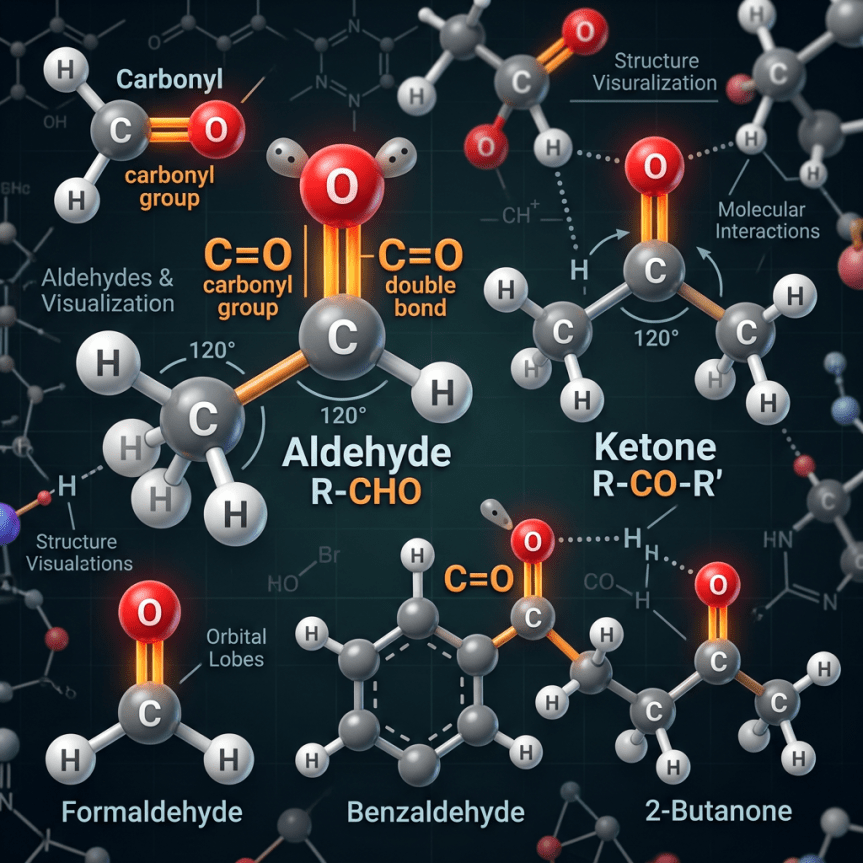
- The pupil will be able to understand the structure of aldehydes, ketones and carboxylic acids, appreciate the planar structure at the carbonyl and carboxyl carbon due to sp2 hybridisation, apply the electronic effects to understand the polarity in the carbonyl and carboxyl groups, visualise the 3D structure of aldehydes, ketones and carboxylic acids with the help of models and software.
- iii. The pupil will be able to recall the formation of aldehydes and ketones by hydration of alkynes,know the conversion of acid chlorides and nitriles to aldehydes, know the mild oxidising agents used for the conversion of toluene to benzaldehyde, extend the Gattermann-Koch reaction for preparation of benzaldehyde from benzene, appreciate the use of alkyl cadmiums and not Grignard reagents for conversion of acid chloride into ketones, know the preparation of ketones from acid chlorides by the use of Grignard reagent, appreciate that some of the above reactions cannot be used for preparation of both aldehydes and ketones, apply the reactions for inter-conversions.
- iv. The pupil will be able to compare the physical properties like physical state, melting point, boiling point and solubility with other functional groups; and amongst the different members of the homologous series, understand the nucleophilic addition reactions, appreciate the need of acidic or basic medium for the nucleophilic addition reaction, apply the nucleophilic addition reaction on the reaction of simple aldehyde and ketones with HCN, NaHSO3, Grignard reagents, ROH, understand the nucleophilic addition followed by elimination reactions, write the product of the reaction of simple aldehyde and ketones with –NH2G, know the reagents used for the reduction to alcohols and to hydrocarbons.
- v. The pupil will be able to differentiate amongst different aldehydes and ketones on the basis of oxidation tests viz., Tollen’s test, Fehling’s test, haloform test), appreciate the acidity of α-hydrogen, understand and write the aldol condensation, predict the products of Cross-aldol condensation, understand Cannizzarro reaction as a disproportionation reaction, recall the meta directing nature of –CHO and –COCH3 groups, write the product of electrophilic substitution reactions (halogenation, nitration).
- v. The pupil will be able to know the structure of carboxylic acid and derivatives, appreciate the resonance in carboxylic acid and derivatives, know the methods of preparation of carboxylic acid by oxidation of alcohols and alkyl benzenes, understand the hydrolysis of nitriles, amides and esters, know the methods of preparation of carboxylic acid from Grignard reagent.
- vi. The pupil will be able to write the product of the reaction of carboxylic acids with metals and alkalies, recall the acidity order amongst mono substituted carboxylic acids, writethe product of the reaction of carboxylic acids with PCl3, PCl5 and SOCl2.
- vii. The pupil will be able to understand the product of the reaction of carboxylic acids with ammonia, knowthe product of reduction, decarboxylation , HVZ reaction and ring substitution.
B) Details of the pedagogical strategies / processes: (Art integrated/sports integrated/story telling method/toy based/any other pedagogy)
- Children are encouraged to observe the naturally occurring aldehydes which provide pleasant fragrances like vanillin (from vanilla beans), salicylaldehyde (from meadow sweet) and cinnamaldehyde (from cinnamon) have very pleasant fragrances.
- Children are encouraged to prepare an ester by the process of esterification and collect the information about the application of esters in the manufacture of perfumes.
- Children are encouraged to create a story on ill effects of aldehydes particularly the individuals are occupationally exposed to formaldehyde, acetaldehyde, acrolein, and crotonaldehyde.
- Children are encouraged to make an art integrated project on the role of acetone and other ketones as solvents (i.e., acetone) and for preparing materials like adhesives, paints, resins, perfumes, plastics, fabrics, etc.
C) Topic of the lesson for presentation by the students 😦 Once in a week by rearranging classroom setting suitable for group work)
Prepare PPT on the following and present the same to the peer group and teacher concerned.
- Nucleophilic addition reactions of aldehydes and ketones.
- Methods of preparation of aldehydes, ketones and carboxylic acids.
- Properties of aldehydes, ketones and carboxylic acids.
- Name reactions of aldehydes, ketones and carboxylic acids.
Children are encouraged to collect the information by visiting the library or browsing the net under the guidance of subject teacher and FCSA.
D) Name 21st century skills to be developed:
- Critical thinking
- Problem solving
- Communication
- Creativity
- Collaboration
- Technology skills and Digital literacy
E) Activities/Experiments/Hands on learning /Projects:
- Esterification reaction between ethanol and ethanoic acid.
- Tests to distinguish aldehydes, ketones and carboxylic acids.
F) Interdisciplinary linkage and infusion of life skills, values, gender sensitivity and environmental awareness:
- Recognize the role of naturally occurring aldehydes which provide pleasant fragrances like vanillin (from vanilla beans), salicylaldehyde (from meadow sweet) and cinnamaldehyde (from cinnamon) have very pleasant fragrances.
- Appreciate the importance of role of acetone and other ketones as solvents (i.e., acetone) and for preparing materials like adhesives, paints, resins, perfumes, plastics, fabrics, etc.
- Create awareness about the ill effects of aldehydes particularly the individuals are occupationally exposed to formaldehyde, acetaldehyde, acrolein, and crotonaldehyde.
G) Resources (including ICT):
- https://ciet.nic.in/swayam_courses.php
- Pradeep,s Chemistry
- NCERT Text Book
H) Assessment items for measuring the attainment of learning outcomes in the
Class and as Home assignments (Teacher should plan Assessment Items and link the
same with learning outcomes mentioned in Para A):
| Items | No of Items | Sl.No. of LO | Items | No of Items | Sl.No. of LO |
| Oral Quiz | – | Presentation | |||
| Portfolio | – | Puzzle | |||
| Multiple choice Questions | 10 | 1 TO 5 | Group Project | ||
| Very Short Answer Questions | 10 | 1 TO 5 | Individual Project | ||
| Short Answer Questions | 10 | 1 TO 5 | Any other Item | ||
| Long Answer Questions | 5 | 1 TO 5 | |||
| Competency based Questions | 3 |
Note: The teacher will keep the records of all assessment items.
I) Remedial Teaching Plans/Plan for unfinished portion of previous unit:
- Practice of previous year CBSE questions.
- Practice of competency-based questions.
- Practice of Assertion-reason type of questions.
- Practice of MCQs
J) Inclusive Practices (Activities/Support measures for differently abled students): NA
Date: (Signature of the teacher)
Remarks of the Principal/Vice Principal:
________________________________________________________________________________________________________________________________________________________________________________________________________________________
(Signature of the Principal/Vice Principal)

