Biomolecules (XII Std)-Important and conceptual Questions

Answer are given in the end–

Questions useful in Board Examination.

1.What is basic unit of carbohydrates?

2.What is basic unit of protein or polypeptide?

3.What is the non reducing sugar and what is cause of it?

4.What do you mean primary structure of protein ?

5. What do you mean secondary structure of protein ?

6.What do you mean tertiary structure of protein ?

7.What is native structure of protein?

8.What is zwitter ion.

9.Which vitamins are fat soluble?

10.What is importance of primary structure of protein?

Answers-

1.Glycosidic Linkages

2.Peptide bond

3.The sugar which reduces Tollen,s reagents or Fehling,s solution is called reducing sugar. It is because their carbonyl functions are not free.

4.The specific sequence of amino acid in protein is called primary structure of protein.

5.Alpha halix or beta pleated sheet are secondary structure of protein which is stabilized by hydrogen bonds. alpha helix is a helical structure whereas beta pleated sheet is formed by placing primary structure sidewise.

6.Tertiary structure of protein is formed by overlapping and folding of primary and secondary structure of over each other. Tertiary structure is stabilized by following bonds-
1) Hydrogen bond formed between -NH2 group and C=O group of different part of polypeptide chain.
2) Ionic bond formed between -NH3+ and COO groups of different part of polypeptide chain.
3) Disulphide bond -S-S- between different part of polypeptide chain.
4) Hydrophobic bond is not actual type of bond but it is a condition in which nonpolar hydrophobic chains moves inside the protein.

7. The original and active shape of protein at particular pH range and temperature range is called native state of Protein.

8.The bipolar ion of amino acid is called zwitter ion.

9.Vitamins A , D , E and K are fat soluble.

10.The change only in one amino acid in polypeptide chain changes property also. Example-In sickle cell anemia is an inherited disease which affect red blood cell and change it into sickle shaped. It is due to change in only one amino acid i.e. glutamic acid by valine in the polypeptide chain making hemoglobin.
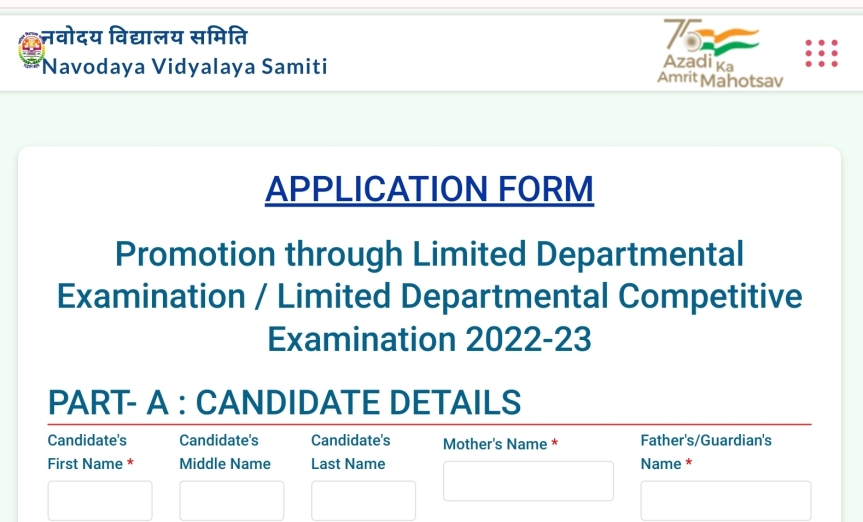
Vacancies in Navodaya Vidyalaya Samiti 2022

Apply for Post of Principal, Vice Principal, PGT and TGT in Jawahar Navodaya Vidyalaya under Navodaya Vidyalaya Samiti ( An Autonomous Body), Department of Education, Govt. of India
1.LDCE / LDE (Notice- https://navodaya.gov.in/nvs/en/Recruitment/LDE/Notification/# )
2.Direct Recruitment ( Notice-https://navodaya.gov.in/nvs/en/Recruitment/Notification-Vacancies/)
3.Special Drive Only For North Eastern Region
( Notice-https://navodaya.gov.in/nvs/en/Recruitment/Notification-Vacancies/) ,

Using following Links- ( For all three recruitments)
https://cbseitms.nic.in/nvsrecuritment
or https://navodaya.gov.in/nvs/en/Recruitment/Fill-up-online-application/

Online Application Page https://cbseitms.nic.in/NVSRecuritment/DCExam/DCExam


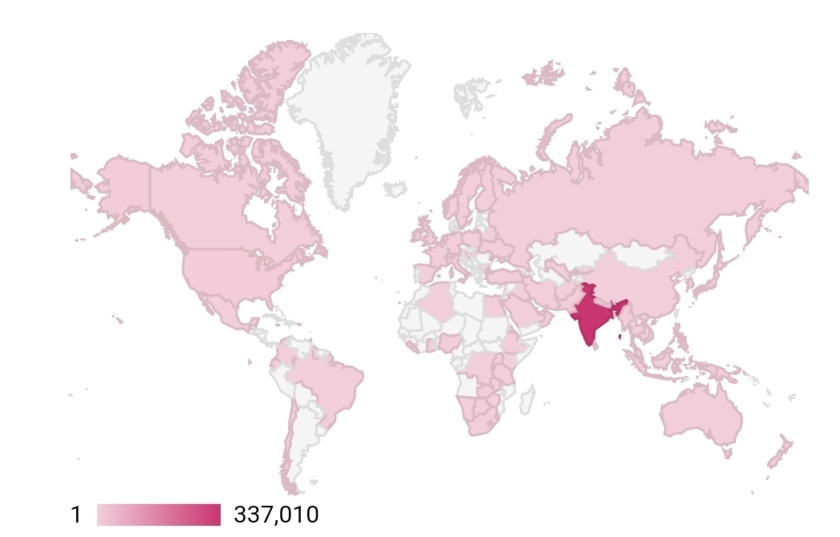
http://www.chemigod/com is viewed in 91 Countries within about 1.5 years after launching

http://www.chemigod.com is viewed in 91 Countries within about 1.5 years after launching

Investigatory Project No:-19- To investigate the chloride content in milk. अन्वेषी / खोजी / जांच परियोजना:-19-दूध में क्लोराइड की मात्रा की जांच करना।

Investigatory Project for Class 11 and 12 Chemistry and Biology CBSE Students

Aim:- To investigate the chloride content in milk.
Apparatus:- Conical flask, burette, pipettes etc.
Reagents:- Ferric alum indicator: In 10% nitric acid, prepared by boiling excess of iron alum, cooling and filtering; Potassium thiocyanate: 0.05 N, (standardized against standard potassium chloride.), Silver nitrate: Approximately 0.05 N, Concentrated nitric acid.
Theory:- The normal range of chloride content


in cow’s milk is 80-140 mg/100 ml and
in buffalo’s milk is 60-70 mg/100 ml.

Determination of chloride content in milk can be used as a means of detecting abnormal milk such as infected udders, colostrum and late lactation milk which are usually high in chloride content.
Values of chloride content higher than 0.14% (140 mg/ 100 ml) in milk indicate the presence of abnormal milk.

Estimation of chloride content in milk is based on argentometric titration (Volhard’s method). In this method a known excess quantity of standard AgNO3 solution is added to the known volume of milk. The chloride present in milk reacts with silver nitrate and forms white precipitate of insoluble silver chloride. The unused AgNO3 (which is present in excess) is back titrated against standard potassium thiocyanate (KCNS) in presence of concentrated HNO3 using ferric alum as indicator. End point of titration is the first appearance of orange-red colour which persists for at least 15 seconds. End point of titration is not clearly visible in sample titration with potassium thiocyanate (KCNS). HNO3 is added to the system to dissolve the interfering casein and also to make the solution acidic so as to keep the AgCI in the precipitated form.

Reactions:-

CI- + Ag+ —–》 AgCI
(until all Cl- is complexed)

Ag+ + SCN- ——-》 AgSCN
(to quantitate silver not complexed with chloride)

SCN- + Fe3+ —–》 FeSCN
(orange-red when there is any SCN- not complexed to Ag+)

Preparation of reagents:-
A. Potassium thiocyanate -0.05 N Solution

w = M x GMM X V ( in ml)/ 1000 w = N x GEM X V ( in ml)/ 1000

w = 0.05 N x 97 g mol- X 100 ml / 1000 = 0.485 g

Dissolve 0.485 g of in water present in 100 ml volumetric flask and make up with water up to the ring.
B. Silver nitrate: Approximately 0.05 N Solution

w = M x GMM X V ( in ml)/ 1000 w = N x GEM X V ( in ml)/ 1000

w = 0.05 N x 170 g mol- X 100 ml / 1000 = 0.85 g

Dissolve 0.85 g of in water present in 100 ml volumetric flask and make up with water up to the ring.

Procedure:-
Take 10 g of the sample, accurately weighed in a 250 ml of Erlenmeyer flask.
To this add 10 ml of silver nitrate solution and 10 ml of concentrated nitric acid. Shake the content.
Digest the mixture until reddish brown fumes are evolved.
Cool the flask and add 1 ml of saturated iron alum solution.
Determine the excess of silver nitrate by titrating with the standard potassium thiocyanate until the first appearance of an orange red colour that persists for 10 seconds.
In the same manner, determine the volume of the standard thiocyanate solution equivalent to 10 ml of silver nitrate using the same volumes of reagents and water.

S.N.Sample of milkX = volume in ml of the standard potassium thiocyanate solution required by the blankY = volume in ml of the standard potassium thiocyanate solution required by the sample{X- Y } Chloride, % by weight = 0.01773 (Y – X)Chloride as sodium chloride, % by weight = 0.02923 (Y- X)
1Cow milk of healthy cow
2Cow milk with infected udders
3Cow milk with colostrum
4Cow milk with late lactation
5Buffalo milk of healthy Buffalo
6Cow milk with infected udders
7Cow milk with colostrum
8Cow milk with late lactation

Calculations:-
Chloride, % by weight = 0.01773 (Y – X)

Chloride as sodium chloride, % by weight = 0.02923 (Y- X) Where,

X = volume in ml of the standard potassium thiocyanate solution required by the blank,
and
Y = volume in ml of the standard potassium thiocyanate solution required by the sample.

Resut:-The samples of milk of cow/ Buffalo with infected udders, colostrum and late lactation cases have more chloride content.

Advertisements

Term-2 JNV Pre Board Question Paper MS 23.3.2022

Class 12 Pre Board Question Papers 2022
with Marking Scheme / Answer Key, Biology And Accountancy
Jawahar Navodaya Vidyalaya

Advertisements

Class 10 Pre Board Question Papers 2022
with Marking Scheme / Answer Key, Science
Jawahar Navodaya Vidyalaya

Advertisements
Advertisements